Learn what steady beginner progress typically looks like week by week, and how to measure improvement that actually matters.
Striking training rewards consistency differently than many gym routines: fitness often improves before your technique looks polished, and coordination usually arrives through repetition. That is why we frame Adult Muay Thai Kickboxing progress around a timeline of realistic milestones, instead of expecting advanced combinations right away.
For most beginners, two to three classes per week is a practical rhythm because it builds skill while leaving room for recovery. As you follow a steady schedule for Adult Muay Thai Kickboxing in Lewes, DE, you can expect measurable changes in movement quality, conditioning, confidence, and composure under fatigue.
Muay Thai is a full-body striking discipline built around punches, kicks, knees, elbows, footwork, defense, conditioning, and controlled partner drills. You do not need prior martial arts experience or elite conditioning to start, and our beginner-friendly structure helps you progress step by step.
The First Week: Getting Comfortable with Basics
Your first week is about learning how training works and building safe habits that prevent common beginner mistakes. Most adults are surprised by how mentally demanding it feels to coordinate stance, guard, breathing, and footwork while also remembering simple combinations. That mental load is normal and temporary.
In a typical first week, we focus on a few foundational skills that show up in every class:
• A stable fighting stance and a consistent guard position so you can strike and defend without losing balance
• Basic footwork and distance management, including moving forward, backward, and laterally without crossing your feet
• Fundamental punches such as jab and cross, plus basic defensive movements like slipping or parrying in controlled drills
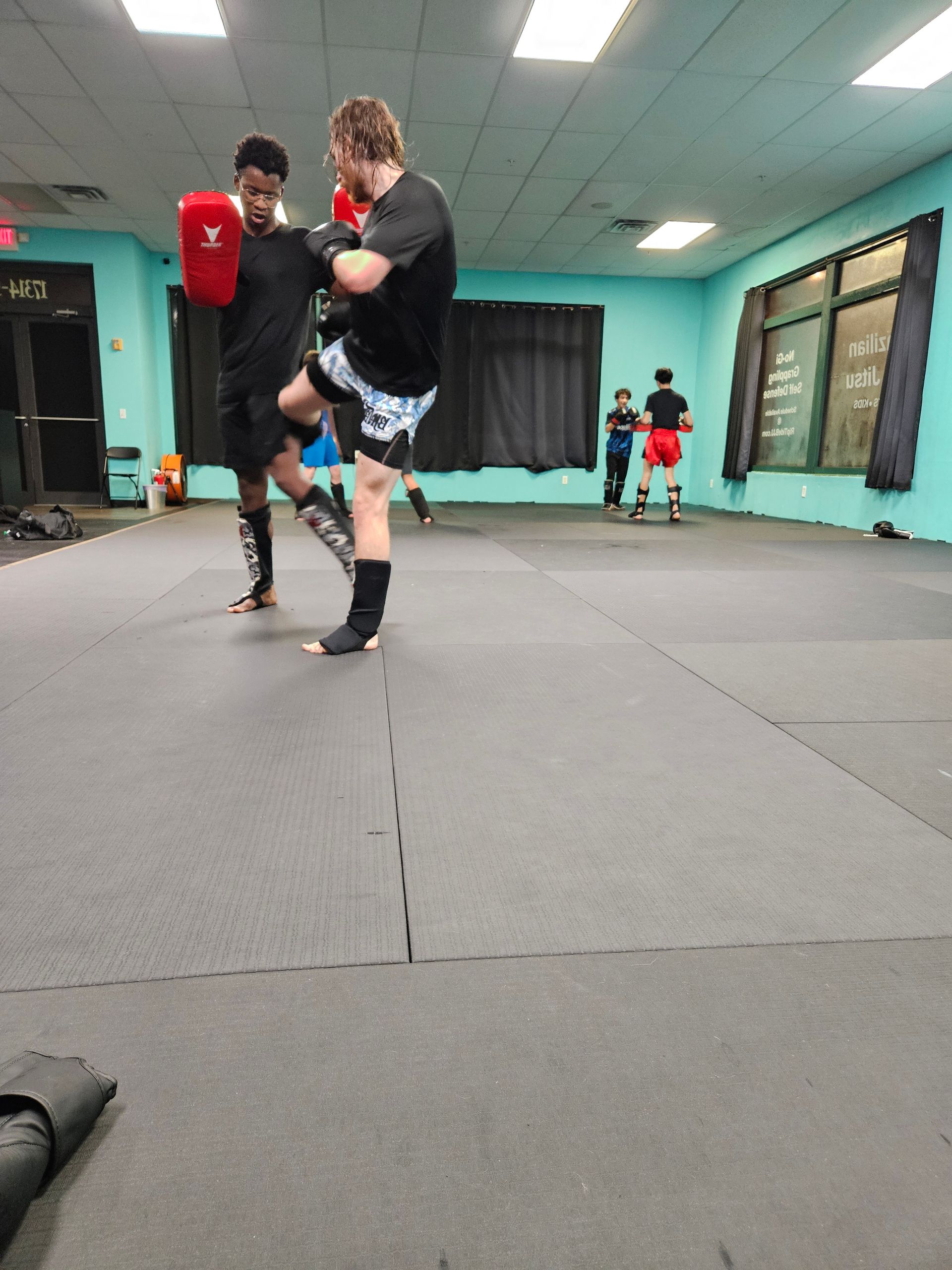
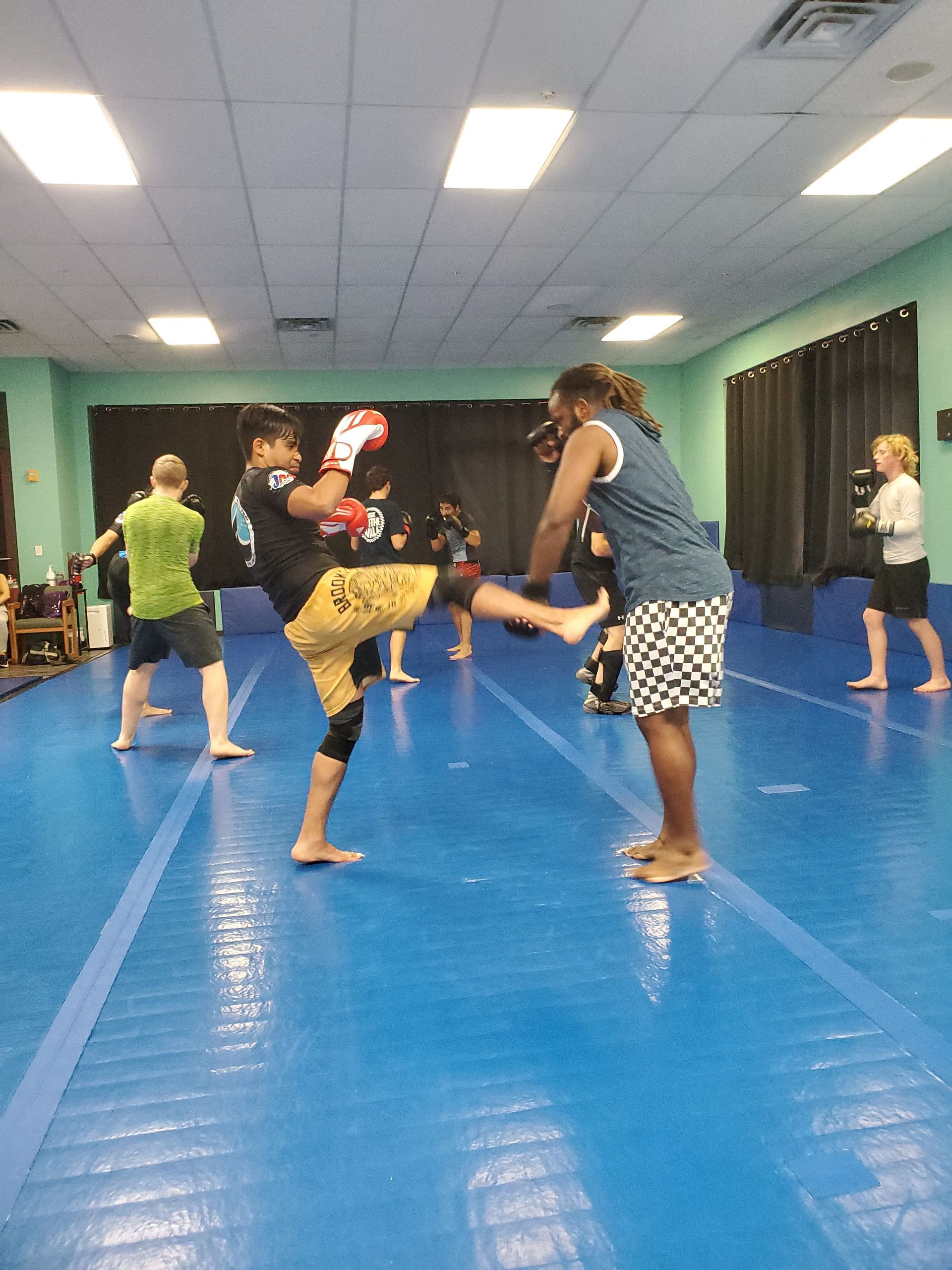
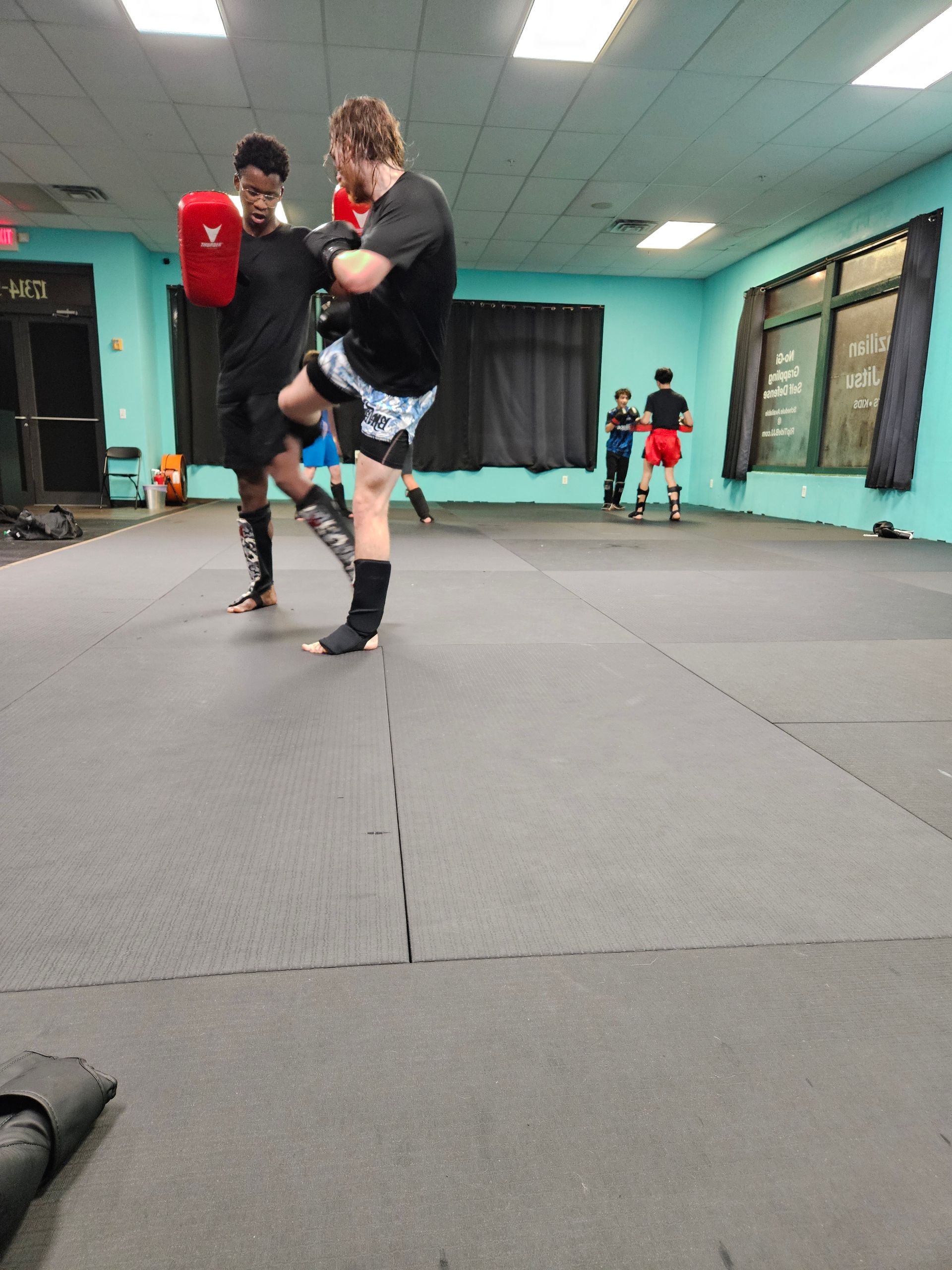
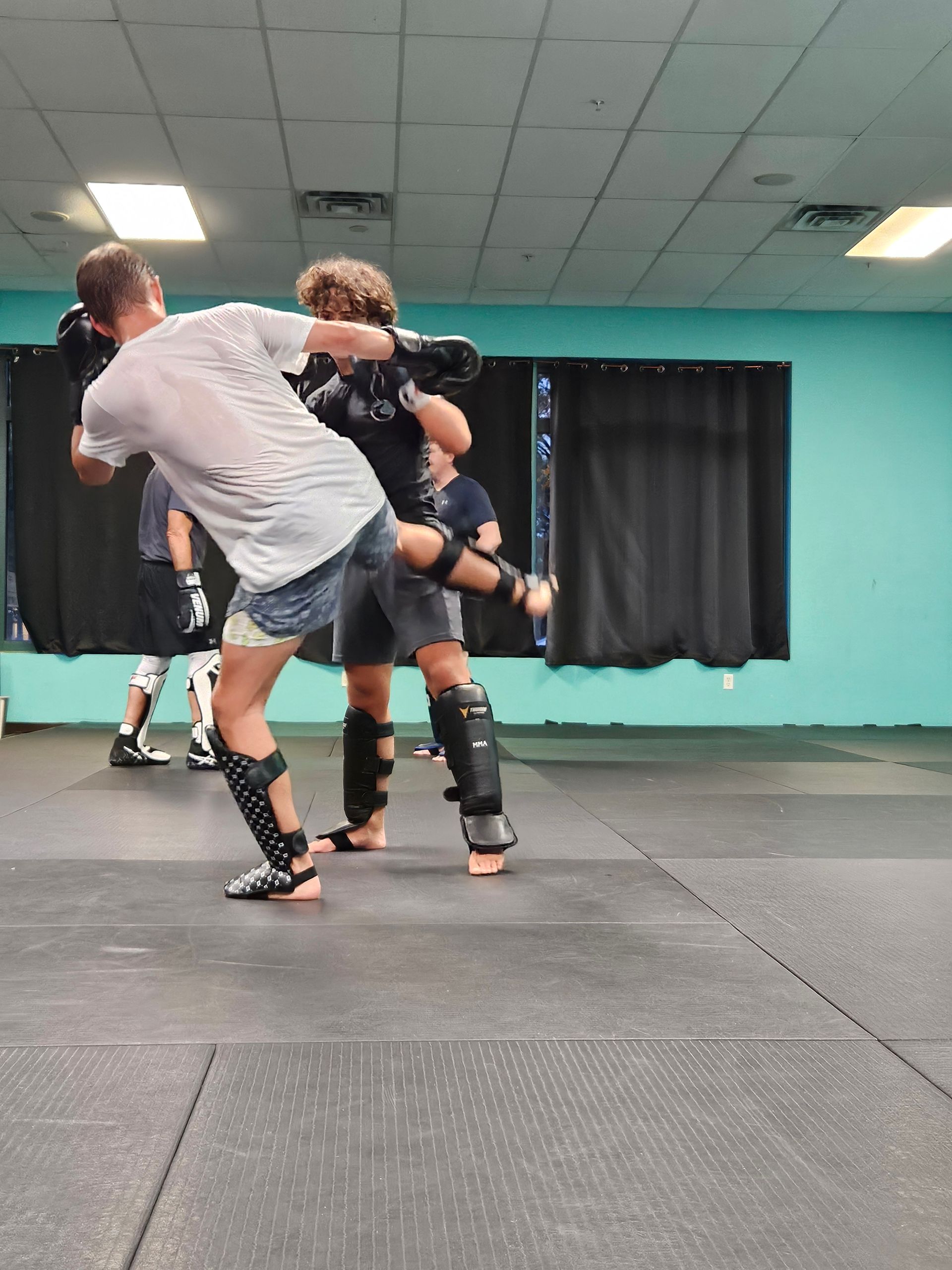
• Introductory kicks such as front kicks and round kicks, with emphasis on posture and returning to stance
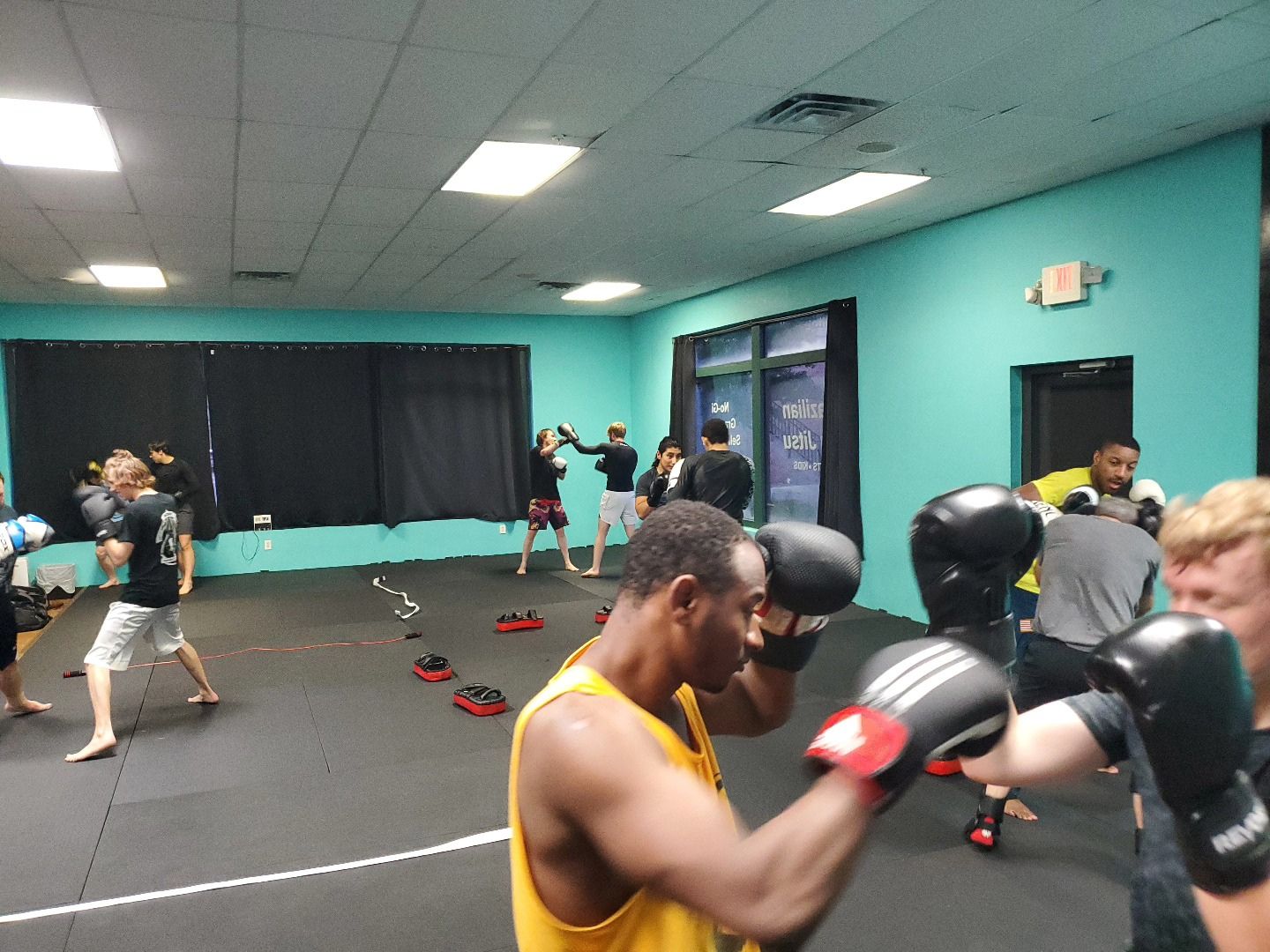
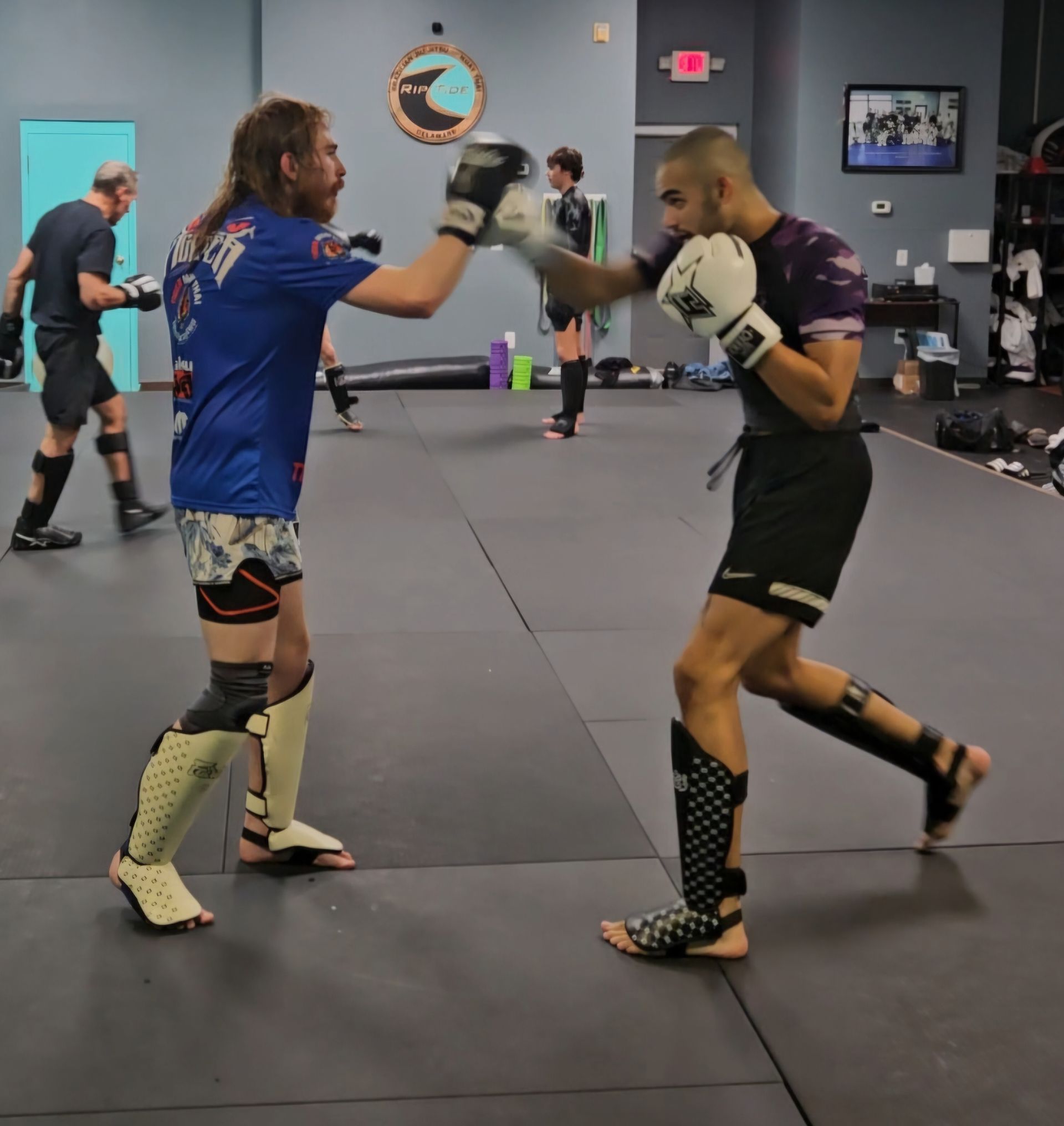
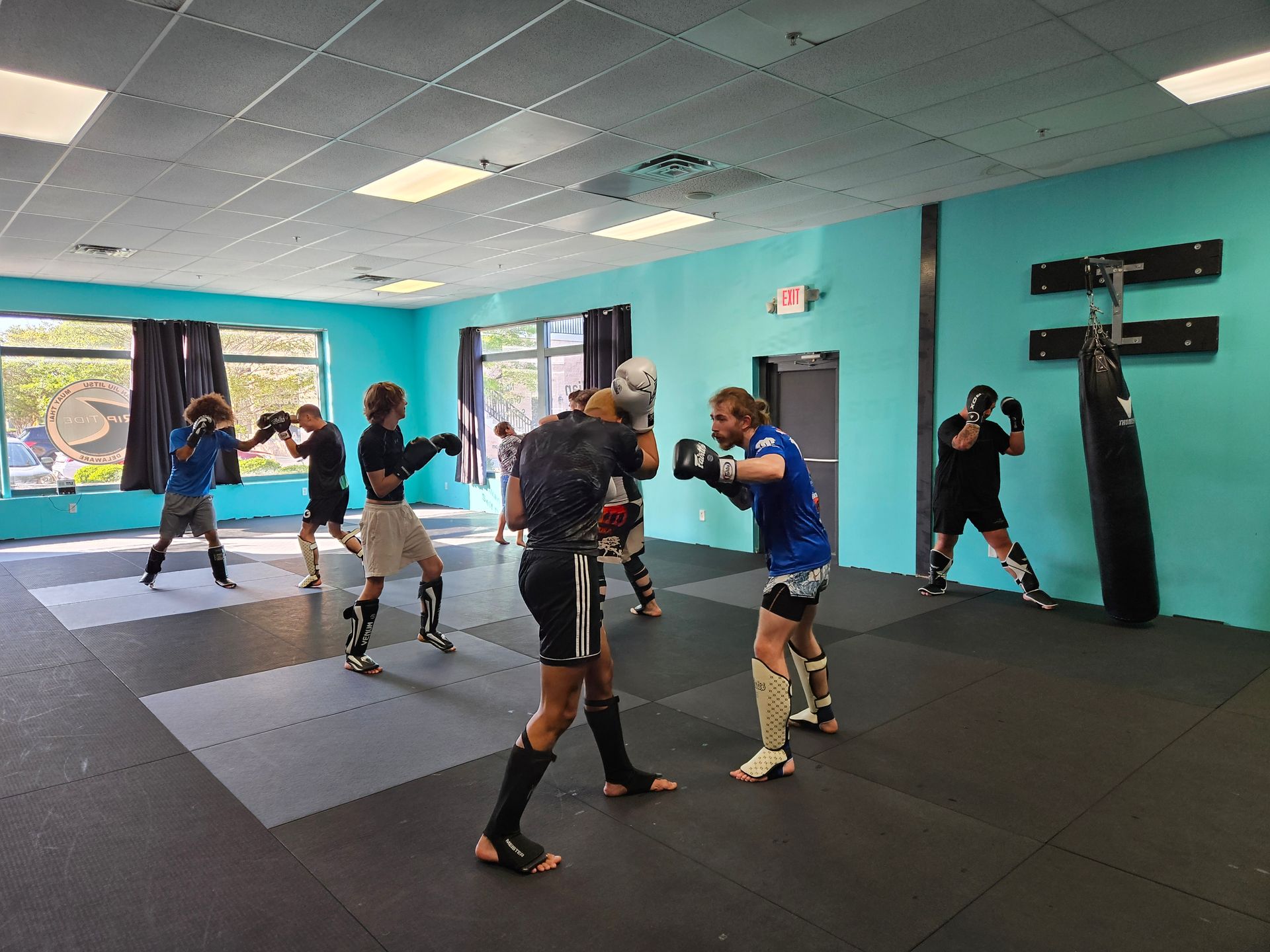
• Pad work, bag work, and partner drills scaled to your comfort level so you can practice with control and good mechanics
Soreness is common in the calves, hips, shoulders, and core because the movements are unfamiliar. We want you to feel challenged, but excessive pain is a signal to tell our coaches so we can modify technique, volume, or intensity.
The main goal of week one is simple: show up, learn how to stand and move safely, and leave class understanding the basic structure. If you finish the week feeling slightly less tense and more able to follow instructions under fatigue, you are on track.
Weeks 2-4: Building Conditioning and Confidence
Weeks two through four are where many beginners start to notice conditioning changes, even while technique still feels inconsistent. You may be able to complete longer rounds on pads or bags with fewer breaks, and your recovery between rounds often improves. Around three to four weeks of consistent training, cardiovascular improvement commonly becomes noticeable for many adults.
During the first month, progress usually looks like this:
• You hold your stance longer during drills instead of standing upright between exchanges
• Your hands return to guard more often after punching, even when you get tired
• You pause less while performing basic combinations because your brain is mapping the sequence
• Your kicks feel less awkward because your balance and hip timing improve gradually
• You understand class terminology and expectations, which reduces self-consciousness
A common frustration in this phase is feeling fitter while still making “messy” technical errors, such as dropping your hands or losing balance on kicks. That gap is normal. Conditioning is largely a capacity issue, while technique is a timing and coordination issue that requires repetition across many classes.
For Adult Muay Thai Kickboxing in Lewes, DE, consistency matters more than intensity. Two to three classes per week is enough volume for most adults to build momentum without beating up joints and connective tissue, especially if you are returning to exercise after time away.
Month 2: Noticing Physical and Mental Changes
By month two, many beginners feel a shift from simply surviving class to training with purpose. This is also when you may start seeing changes in muscle tone or body composition, often around six to eight weeks for consistent trainees, though results depend heavily on nutrition, sleep, stress, and starting fitness.
Physically, month two often brings clearer feedback from your body. You may notice better balance when you kick, stronger legs and trunk stability in your stance, and improved mobility in hips and shoulders. You also tend to waste less energy because your movements become more efficient.
Mentally, this phase is where a lot of adults decide the training is “working” for them. Structured practice can improve stress management, attention, and confidence because you have a repeatable challenge with measurable milestones. Many students also feel more comfortable training with partners, which is important because controlled drills are a core part of Muay Thai development.
If you are combining striking with Brazilian Jiu-Jitsu in Lewes, DE, month two is the time to be careful about total training volume. The arts complement each other, but adding extra sessions too quickly can increase overuse injuries. We often recommend building a stable base schedule first, then adding one session at a time with recovery in mind.
Month 3: Developing Technique and Sparring Skills
Around month three, many beginners start linking skills together. You may find it easier to throw a basic punch-kick combination without resetting your feet, and you can often recognize simple openings, such as when a partner’s guard is high or when distance is off.
In this phase, the milestones we value are practical:
• You maintain posture and guard longer, even when breathing hard
• You use footwork to manage range rather than standing flat-footed
• You control power on pads, bags, and partner drills with better precision
• You stay calmer under pressure during faster drills
• You apply one or two defensive reactions without freezing
If sparring is offered, we treat it as a skill development tool with clear rules and controlled intensity. Sparring is not a requirement for progress, and it is not a test you pass or fail. For most beginners, the meaningful milestone is demonstrating composure and control: listening to your partner, keeping contact appropriate, and applying fundamentals safely.
Adult Muay Thai Kickboxing training is a long-term practice. Month three is often where you feel the first hint of “flow,” but it is also where details matter more. Small adjustments to stance width, hip rotation, and guard return can create big improvements.
Milestones to Watch For: Signs of Progress Every Beginner Sees
Because progress can feel gradual day to day, it helps to track specific benchmarks. We encourage you to measure outcomes that reflect real skill development instead of judging yourself by advanced techniques.
Here are beginner milestones that usually show up within the first three months when you train consistently:
• You attend regularly for four consecutive weeks and your recovery between sessions improves
• You finish the same number of rounds with less exhaustion and fewer long pauses
• You remember basic combinations without needing constant reminders
• You keep your guard higher when tired and you reset faster after mistakes
• You return your kicking leg back to stance with better balance and fewer stumbles
• You move forward, backward, and laterally without crossing your feet
• You hit pads with better timing and accuracy, using less unnecessary force
A simple training log helps. Record your attendance, what you drilled, and one correction you focused on. This makes Adult Muay Thai Kickboxing progress easier to see, especially for adults balancing work, family, and inconsistent seasonal routines.
When to Expect Plateaus and How to Stay Motivated
Many adults hit a plateau after the early excitement fades. That does not mean you stopped improving. It often means you are repeating the same intensity, missing sessions, or trying to learn too many techniques at once. Recovery can also become the limiting factor, especially with busy schedules or poor sleep.
When progress feels slow, these strategies help:
1. Set an attendance goal for the next month and treat it as your main metric.
2. Choose one technical focus each week, such as guard return, stance stability, or kick balance.
3. Alternate hard conditioning rounds with lighter technical rounds so quality stays high.
4. Add mobility work for hips, ankles, and thoracic spine to support cleaner kicks and posture.
5. Ask our coaches for one specific correction you can repeat for an entire class.
In Sussex County, schedules often change with beach season, travel, and longer workdays. Some adults start training in spring for summer fitness goals, while others begin in early fall to reset routines. The most effective start date is the one that matches a sustainable weekly schedule you can maintain for months.
How Rip Tide Supports Your Growth in Lewes
Progress happens faster when the environment is structured and beginner-friendly. At
Rip Tide Brazilian Jiu Jitsu, our Adult Muay Thai Kickboxing in Lewes, DE program is designed so you can start without prior experience and build skills through fundamentals, repetition, and coached feedback. Our broader offering also includes Brazilian Jiu-Jitsu in Lewes, DE, which many students add over time when they want a more complete martial arts foundation.
We are located at 17314 N Village Main Blvd 51, Lewes, DE 19958, and our class schedule includes multiple training windows across weekdays and weekends. If you want to blend striking with grappling, we can help you build a weekly plan that supports recovery and avoids doing too much too soon. For many adults, the best early goal is simple: show up two to three times per week, learn the fundamentals with control, and let the timeline work.
Ready to see your own progress? Try a Muay Thai Kickboxing class at Rip Tide in Lewes and start your journey today.
No experience is necessary to
join a Muay Thai class at Rip Tide Brazilian Jiu Jitsu and learn step by step in a welcoming environment.